





When Hidden Symmetries Break a New Cosmic Clue

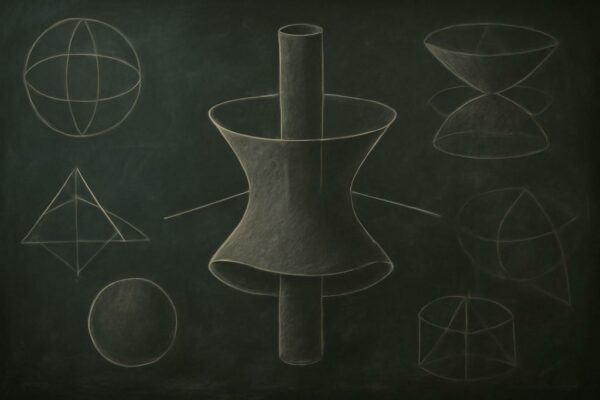
Cosmic space is not just empty—it’s a theater where symmetry plays the lead role. The rules that describe how objects and light move in spacetime are deeply tied to hidden, almost musical patterns. When those patterns break or reorganize, new behavior emerges in ways that physicists can track and mathematicians can classify. The work we’re…

Read More

Do giant stars hide a sunlike magnetism

The magnetic fingerprints of stars aren’t just a science-y detail tucked away in the footnotes of astrophysics. They are, in a very real sense, the weather reports of stellar life cycles—signals that tell us how a star breathes, loses mass, and eventually meets its quiet end. For years, magnetism in the most colossal, luminous stars…

Read More

Is Our Galaxy Teeming with ‘Second Earths’?

The Hunt for Habitable Worlds: A Cosmic Treasure Hunt Imagine a vast, star-studded ocean, each star a sun potentially harboring planets. For decades, we’ve known exoplanets exist, worlds orbiting distant suns. But finding truly Earth-like planets — those with conditions potentially suitable for life — remains a holy grail of astronomy. A new report from…

Read More

The 30-Fs Blink Powers CNT Solar Cells.

The solar cell for the 21st century isn’t a single sheet of mystery material; it’s a fast, chord-like sequence of events in which light becomes electricity in a race against time. In many next‑gen devices, photons conjure excitons—tiny, bound electron–hole pairs—that must wander to a boundary where they split into charges. For years, scientists tried…

Read More

When Tiny Atomic Resonances Rewrite Nuclear Physics

Imagine a universe where the building blocks of matter—atoms—surprise us with their behavior. We think we understand the rules, but then something unexpected emerges: a low-lying resonance in a core-neutron interaction that, against all odds, helps create a stable, three-body bound state. This isn’t science fiction. Recent research from the University of Tennessee, Knoxville, Oak…

Read More

Battery-free backscatter dodges interference with frequency-space division across bands

Across modern factories, fleets of tiny sensors monitor temperature, vibration, and machine health, often powered by harvested energy rather than batteries. These battery-free backscatter tags don’t generate their own signals; they reflect the reader’s excitation and ride along on the same airwaves. It’s a quiet enabler of pervasive sensing on the factory floor, but once…

Read More

Heat Waves in the Age of AI Weather Forecasts

Extreme heat is not just a meteorology problem; it’s a public health deadline. When thermometers surge, people suffer—especially the most vulnerable in cities with aging power grids, crowded housing, or limited access to cooling. As climate change nudges heat waves toward longer durations and higher peaks, forecasts become lifelines: they guide hospital preparations, energy management,…

Read More

Can AI Write Faster by Splitting Its Thoughts

Generative AI has become a kind of writing partner—glued to keyboards, churning ideas, shaping paragraphs with a speed that feels almost magical. But beneath the flash of fluent text lies a stubborn bottleneck: the way most large language models generate one token at a time, strictly in sequence. A team from Nanjing University in China…

Read More