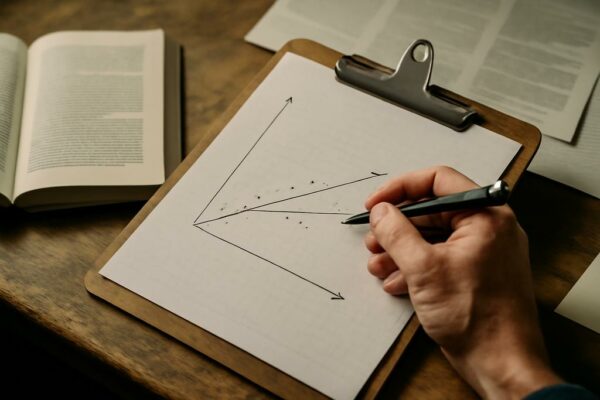






A Harmonic Polynomial Vanishes on a Cube’s Skeleton

A Harmonic Polynomial Vanishes on a Cube’s Skeleton Harmonic functions are the quiet workhorses of potential theory: heat, gravity, and electrical fields blend into smooth, source-free shapes that obey Laplace’s equation. Their zeros—the places where the function hits zero—often feel like the hidden skeletons of these fields, revealing where a system can settle into calm…

Read More

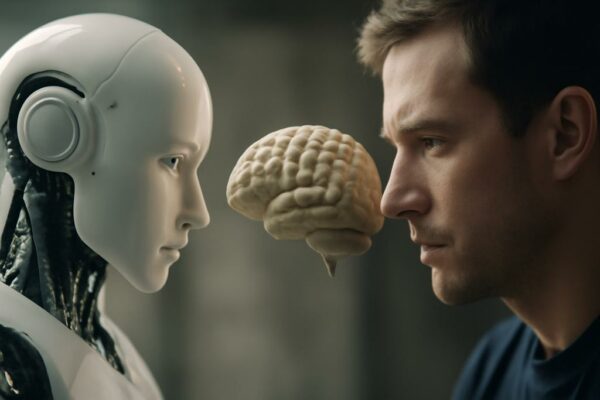
A Tiny Subspace Bridges LLM Uncertainty and Scale

Large language models have become everyday collaborators, churning out answers, drafting emails, and even steering decisions in software that touches real lives. Yet beneath the surface lies a stubborn problem: these models can be confidently wrong, and in high-stakes domains—healthcare, autonomous systems, law—that confidence can be dangerous. The field has long chased a principled way…

Read More

AI That Learns From Mistakes: How a ‘Mixture of Experts’ Solves the Concept Drift Problem

The Evolving World of Data The digital world throws a constant torrent of data at us—from sensor readings to social media posts, financial transactions, and network logs. This isn’t the neatly packaged data of a textbook; it’s a dynamic, ever-shifting river. Traditional AI struggles with this chaotic flow, a problem known as “concept drift.” Imagine…

Read More

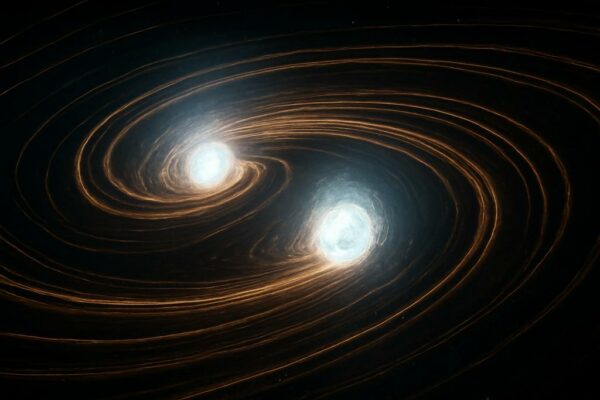
Are Wormhole Throats Really Stable in Our Universe?

Wormholes have always hovered between science and myth—the imagined tunnels through spacetime that could, in principle, connect distant regions of the cosmos. A new study from the University of Texas at Dallas, led by Travis Rippentrop, Avijit Bera, and Mustapha Ishak, digs into a pressing question behind that science-fiction gloss: can these thin-walled bridges stay…

Read More

Collision Models Teach Quantum Open Systems How They Evolve

Open quantum systems are the rule, not the exception in the real world. A quantum device rarely lives in isolation; it is constantly brushing against an environment—air, stray photons, vibrating lattices—until its fragile quantum states degrade. For decades, physicists have used continuous-time master equations to describe this bath-induced evolution, with the Lindblad equation as a…

Read More