


LHC Detects a Hint of Something Unexpectedly Broad

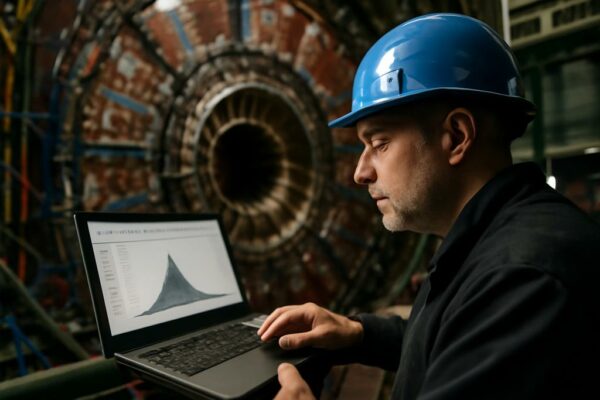
A Glimmer in the Data The Large Hadron Collider (LHC) at CERN, that colossal atom-smasher buried beneath the Franco-Swiss border, has once again yielded intriguing results. A recent analysis by the CMS Collaboration, reinterpreting data from a previous search, hints at something unexpected: a broad resonance, a phenomenon that shakes up our understanding of particle…

Read More

Quantum Randomness: A New Kind of Unconditional Security

The quest for true randomness is a fundamental challenge in both classical and quantum computing. True randomness, the kind you get from truly unpredictable sources like radioactive decay, is often impractical to generate in large quantities. Pseudorandomness provides an elegant workaround: generating sequences that *look* random to a computationally limited observer. This is akin to…

Read More

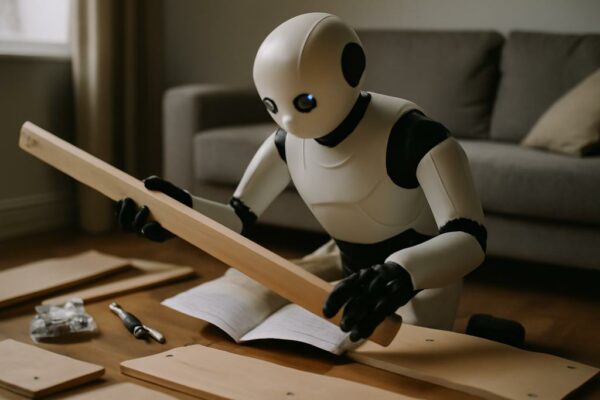
The Art of Teaching AI to See and Reason

In the growing chorus of artificial intelligence that can describe a photo, translate a caption, or answer a riddle about a chart, a stubborn question keeps echoing: can these systems really combine multiple skills at once, or do they stumble when the task demands several abilities at the same time? It’s a bit like asking…

Read More

When Thin Films Bend Beyond the Ordinary

Invisible Waves on a Thin Elastic Stage Picture a delicate film of liquid stretched across a narrow trough, its surface not just a passive boundary but an elastic sheet that resists bending. This isn’t just a fanciful image—it’s a physical system that challenges our understanding of how materials deform and flow when constrained in tight…

Read More

When Digital Twins Team Up to Cut Transport Emissions

Transport is the invisible thread stitching together cities, economies, and daily life. It moves people, goods, ideas, and dreams, but it also carries a heavy burden: greenhouse gases, congestion, and the messy, often unpredictable dance of hundreds of systems in motion. The UK, like many places, faces a daunting target: decarbonize a sprawling, fossil-heavy transport…

Read More

The subtle art of not finding what you’re looking for

The Unexpected Limits of Finding Patterns Imagine a world where searching for patterns isn’t about finding them, but about carefully avoiding specific ones. That’s the essence of a fascinating area of mathematics explored in a recent paper from the University of British Columbia and the Alfréd Rényi Institute of Mathematics, authored by R.P. Anstee, Oakley…

Read More

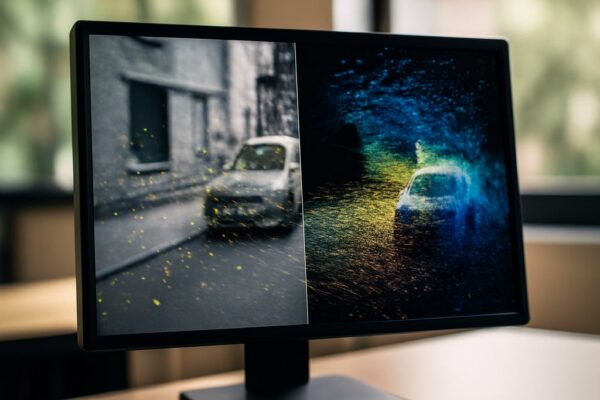
When 2D Keypoints Conquer a Dense LiDAR Map?

Visual localization is the quiet but essential magic behind every slick AR demo, every autonomous delivery robot, and every mapping app that seems to know where you are without asking. It’s the challenge of figuring out the camera’s 6-DOF pose—the exact position and orientation in three-dimensional space—within a sprawling 3D map. For years, researchers leaned…

Read More

Lego, Phones, and the Secret Language of Waves

Forget expensive labs and complicated simulations. Researchers at University College Dublin, led by Lennon Ó Náraigh, Nicolas Farault, and Nicola Young, have shown that you can unlock the mysteries of water waves using surprisingly simple tools: a tabletop flume built from Lego, a smartphone, and some clever software. The Unexpected Elegance of Simplicity The study,…

Read More

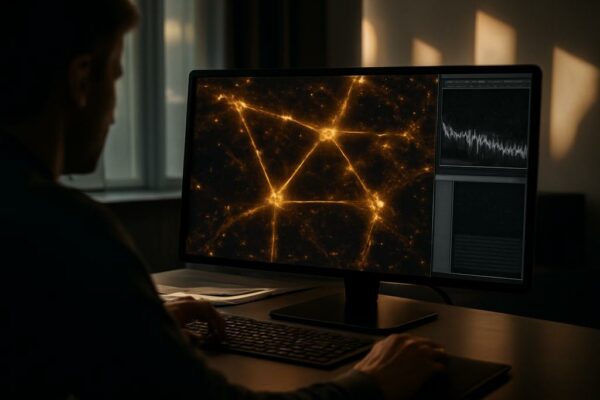
Triangles of Light Map the Cosmic Web

The universe isn’t a smooth ocean of galaxies. It’s more like a vast, lopsided foam of filaments, knots, and empty pockets—a cosmic web stitched together by gravity over billions of years. Our best map of that web comes not from directly seeing matter, but from watching how light is absorbed as it travels to us….

Read More