





This Tiny Chip Could Make AR/VR Explode

A Leap Forward in Real-Time 3D Rendering Imagine a future where augmented and virtual reality (AR/VR) aren’t clunky, laggy experiences, but seamlessly integrated parts of our everyday lives. That future is closer than you think, thanks to a groundbreaking new chip developed by researchers at the Georgia Institute of Technology and National Tsing Hua University….

Read More

AI Fails to Grasp Populism’s Nuances: Trump’s Rhetoric Reveals AI’s Limits

Can artificial intelligence truly understand the subtleties of human politics? A new study from the University of Copenhagen, led by Ilias Chalkidis, Stephanie Brandl, and Paris Aslanidis, throws cold water on that idea. Their research delves into the surprisingly complex task of using AI to identify populism in political speech, revealing unexpected limitations in even…

Read More

Tiny controls, big boost for fluid mixing

In the quiet world of fluids, mixing is one of the oldest, messiest problems. Diffusion — the slow, patient random jiggle of molecules — loves to drag its feet. Advection, the grand stirring motion of a flow, can speed things up, but engineers and mathematicians have long faced a stubborn question: can we make mixing…

Read More

A Free Blueprint for Stable State Space AI

Control is a tricky business for AI models. They can learn clever patterns, but a sudden gust of data can push them past their comfort zone. In real machines—think autonomous drones, industrial robots, or energy grids—the cost of a misstep isn’t just a misprediction; it can be a safety risk or a costly shutdown. The…

Read More

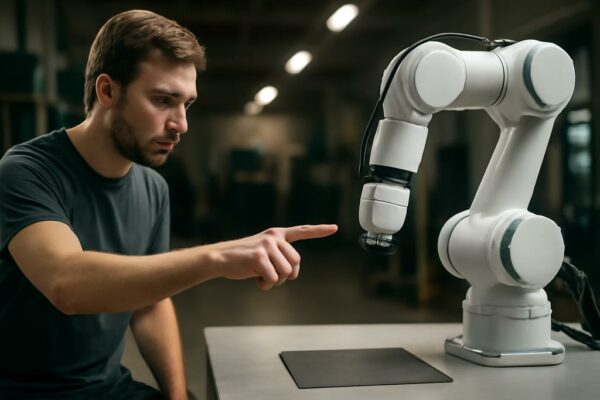
Robots’ Looks: A New Way to Measure What Matters

The Robot Morphology Revolution Forget broad strokes like “humanoid” or “animal-like.” A groundbreaking new framework from the University of Bremen, called METAMORPH, is poised to revolutionize how we understand and classify robot appearance. Led by researchers Rachel Ringe, Robin Nolte, Nima Zargham, Robert Porzel, and Rainer Malaka, this approach moves beyond simple categories to a…

Read More

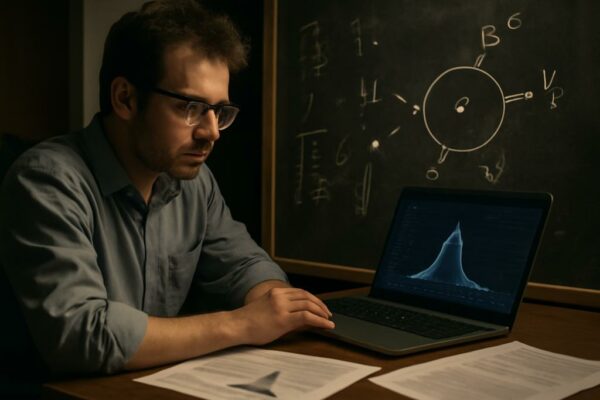
Can Noise Turn Quantum Transport into a Classical Flow?

Universality Hidden in Noise In the quiet mathematics of quantum physics, noise usually seems like a villain: it spoils delicate quantum effects, blurs interference patterns, and makes clean predictions slip through our fingers. Costa, Ribeiro, and De Luca flip that script. They investigate a one‑dimensional chain of free (non‑interacting) fermions subjected to different forms of…

Read More

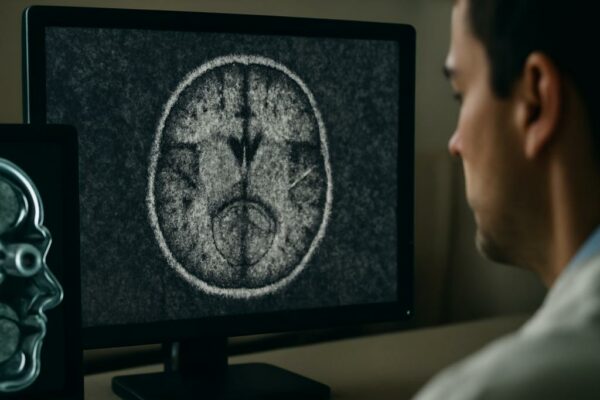
Energy Clues Redefine How Nuclei Change Charge States

In the grand game of nuclei, protons and neutrons are players in a delicate dance. When two atomic nuclei collide at high speed, sometimes a proton—effectively a charged guest—gets traded or removed. The likelihood of that charge-changing event, called a charge-changing cross section (CCCS), carries the fingerprints of how protons are distributed inside the nucleus….

Read More

When Actions Break Apart Reinforcement Learning

Reinforcement learning has shifted from quirky lab curiosities to tools that steer robots, optimize energy grids, and even suggest treatment strategies in hospitals. Yet the leap from a neat equation to a working system in the wild often stumbles on a stubborn obstacle: the space of possible actions can blow up into a combinatorial explosion….

Read More