



Linked Horseshoes Hint at Chaos in Four Dimensions

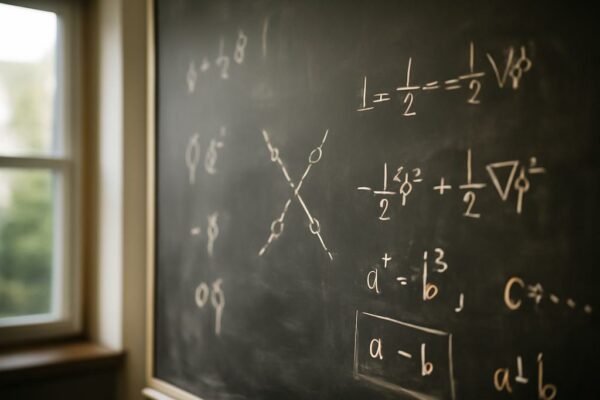
Four-dimensional dynamics isn’t a party you can easily picture. The usual three-dimensional intuition—where a butterfly’s wings tremble into a roar of chaos—loses its footing when extra dimensions enter the room. Yet a new lineage of mathematical work has found a way to choreograph chaos in a space that feels almost alien: a four-dimensional stage built…

Read More

How Many Trees Can Share at Least ‘t’ Branches?

Unraveling the Intersections of Spanning Trees Imagine a sprawling network, a complete graph where every node is connected to every other node. Now, picture all the possible spanning trees within this network – each a skeleton of connections, reaching every point without any cycles. A new mathematical result, emerging from the University of Minnesota Duluth,…

Read More

Your Home: A Better Investment Than You Think?

The conventional wisdom among financial experts often paints a bleak picture of homeownership. Many advise against it, viewing houses as illiquid, risky assets that underperform stock investments over the long haul. But a new study from researchers at California State University, Fullerton; the Hong Kong University of Science and Technology; and the University of Missouri,…

Read More

AI Can Book Your Trip, But Can It Understand You?

The dream of a perfectly helpful AI assistant is closer than ever. These digital companions can already accomplish impressive tasks, from writing code to solving complex mathematical problems. But a new study from Salesforce AI Research and the University of Illinois Urbana-Champaign reveals a surprising blind spot in these advanced systems: they often fail to…

Read More

AI’s New Trick: Rewriting Its Own Mind Without Retraining

Imagine a world where we could fine-tune artificial intelligence without the usual massive computational costs and risks. That’s the promise of a groundbreaking new technique developed by researchers at UNC Chapel Hill, detailed in their paper, GRAINS (Gradient-based Attribution for Inference-Time Steering of LLMs and VLMs). Forget painstaking retraining; this method allows us to tweak…

Read More

Diffusion Unveils Precise Open-Vocabulary Segmentation for Real-World Images

Images are everywhere, and teaching machines to understand what they show without enumerating every possible object is a stubborn puzzle. Open-Vocabulary Semantic Segmentation aims to cut through that maze by letting models segment scenes according to any text prompt, not just a fixed menu of categories. FA-Seg, a training-free framework built around diffusion models, promises…

Read More

When Thin Films Bend Beyond the Ordinary

Invisible Waves on a Thin Elastic Stage Picture a delicate film of liquid stretched across a narrow trough, its surface not just a passive boundary but an elastic sheet that resists bending. This isn’t just a fanciful image—it’s a physical system that challenges our understanding of how materials deform and flow when constrained in tight…

Read More