




Collision Models Teach Quantum Open Systems How They Evolve

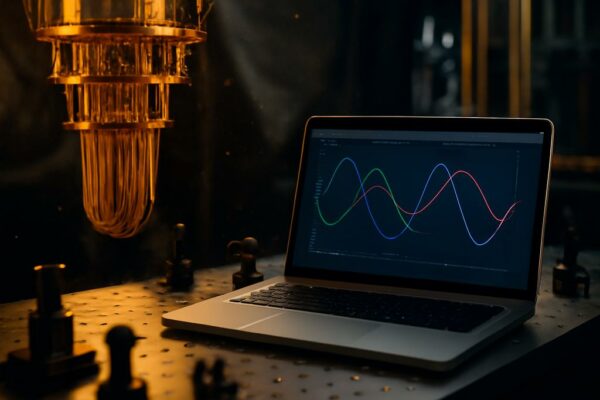
Open quantum systems are the rule, not the exception in the real world. A quantum device rarely lives in isolation; it is constantly brushing against an environment—air, stray photons, vibrating lattices—until its fragile quantum states degrade. For decades, physicists have used continuous-time master equations to describe this bath-induced evolution, with the Lindblad equation as a…

Read More

An AI Ensemble Rewrites How We Tag Knowledge

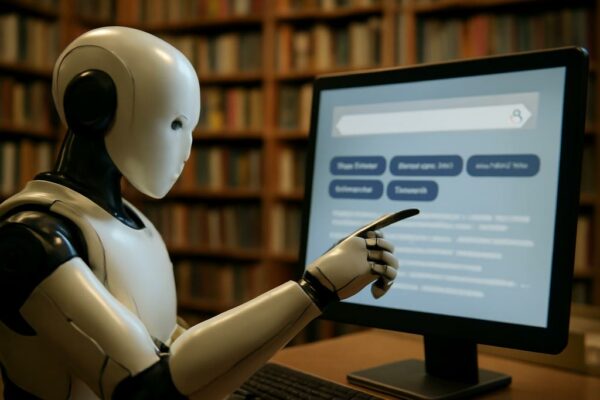
Libraries are the great equalizers of the information age, but the avalanche of digitally published material has turned tagging into a moving target. If you’ve ever hunted for a paper, a chapter, or a dataset, you know the friction: you’re searching not just for exact titles but for the threads that connect ideas across disciplines,…

Read More

Can an Open-Source Engine Teach AI to Learn Faster?

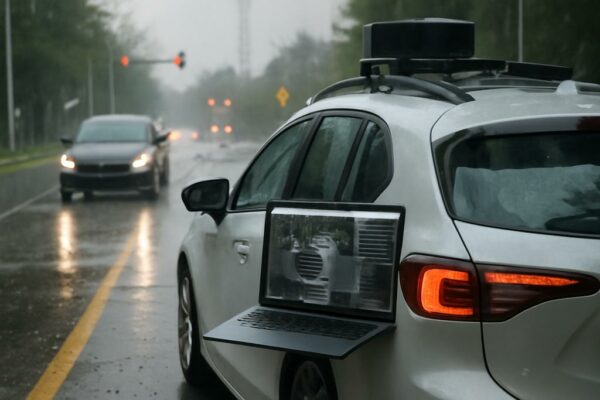
Data pours into perception systems the way rain floods a city street: streams from cameras, sensors, and roadside networks, more than any single team can neatly label. The challenge isn’t just volume; it’s bias. The most interesting moments in traffic aren’t the everyday ones that appear in textbooks, but the rare, strange, or dangerous events—the…

Read More

When Quantum Channels Learn to Be Patient

In the quantum world, even the quietest channels have a life of their own. They shuffle information and states around, sometimes with almost musical precision, sometimes with turbulent chaos. For decades, mathematicians and physicists have asked: after how many steps do these shuffles become reliable, no matter where you started? Classically, a venerable answer sits…

Read More