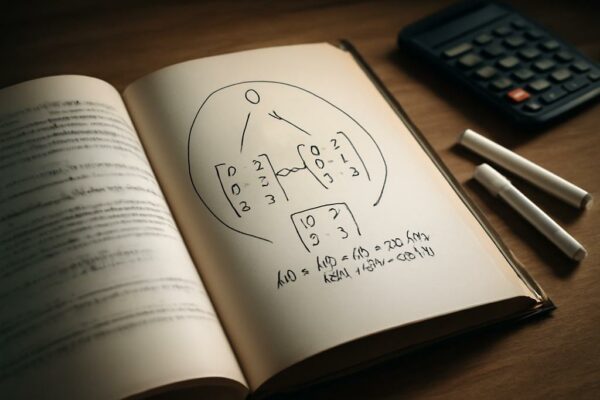




Proofs Train Themselves to Refactor with Hidden Tactics

In the realm of formal mathematics, computers prove theorems by following carefully crafted steps called tactics. When proofs grow long and tangled, researchers imagine a smarter way to reuse patterns—the software-library mindset applied to reasoning itself. The idea sounds almost like teaching a machine not just to solve a single puzzle, but to learn how…

Read More

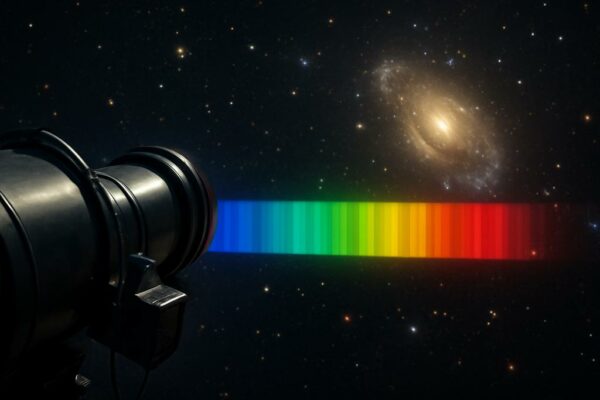
A Sharper Cosmic Map From Template Redshifts

In the vastness of the cosmos, distance isn’t just light-years—it’s the scroll of cosmic history. To chart the three-dimensional map of galaxies, astronomers rely on redshift, a measure of how much the universe has stretched light on its journey to us. Spectroscopic redshifts—where we split light into a spectrum and read off precise fingerprints—are exquisitely…

Read More

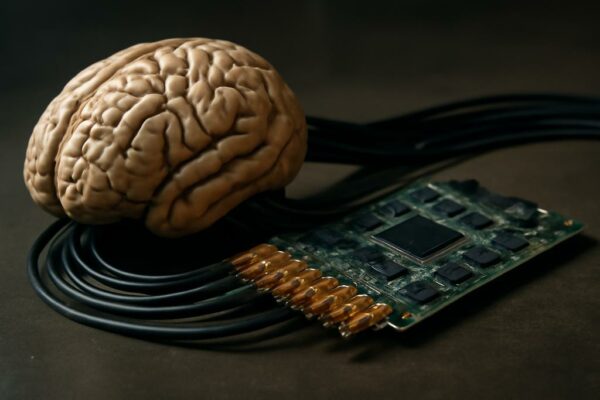
A digital brain that streams data from detectors

In the noisy, high-stakes world of nuclear physics, detectors are more than sensors. They’re tremulous listeners that emit streams of tiny signals when atoms rearrange, ions crash, or photons whisper from a gamma-ray shower. The critical trick is not just catching a single flash accurately, but handling thousands of signals in parallel, every nanosecond counting….

Read More

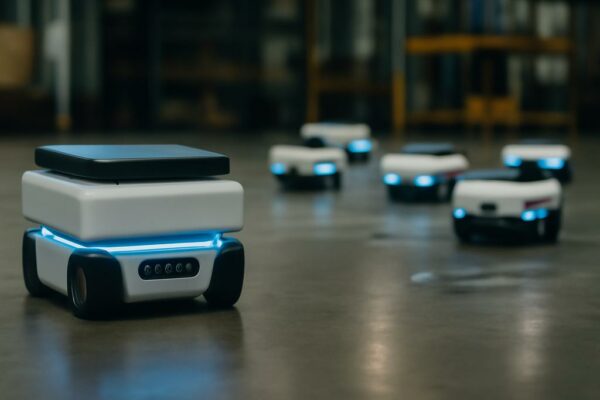
Battery-free backscatter dodges interference with frequency-space division across bands

Across modern factories, fleets of tiny sensors monitor temperature, vibration, and machine health, often powered by harvested energy rather than batteries. These battery-free backscatter tags don’t generate their own signals; they reflect the reader’s excitation and ride along on the same airwaves. It’s a quiet enabler of pervasive sensing on the factory floor, but once…

Read More