





Can We Trick Our Brains into Saving the Planet?

The Psychological Distance Problem We face a curious paradox. We know climate change is a looming catastrophe, yet many of us struggle to act. The reason, according to new research from the University of Toronto, might lie in something called “psychological distance.” This isn’t about physical distance, but rather the way our brains process information…

Read More

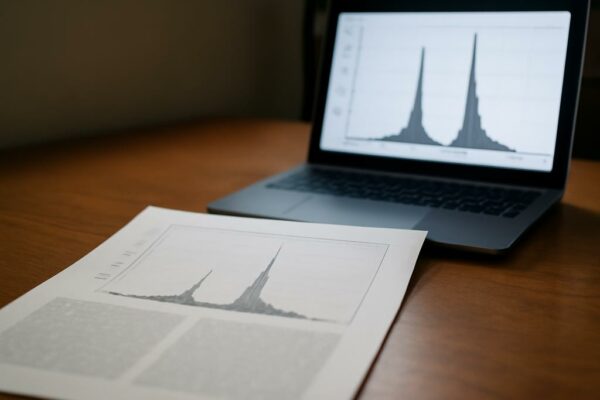
Smarter Stats: Taming Quantiles with Smoothness

Imagine trying to predict not just the average outcome, but the range of possibilities. That’s where quantile regression comes in – a statistical tool that lets us estimate different points in a distribution, like the 25th percentile (the value below which 25% of the data falls) or the 90th percentile. It’s incredibly useful in fields…

Read More

When AI Hallucinates, Sometimes Subtitles Can Help

Imagine trying to explain something complex to a friend, but instead of speaking, you decide to write your instructions directly onto a photograph. It sounds bizarre, but this seemingly absurd idea is at the heart of a fascinating experiment that’s revealing surprising quirks in how AI “sees” the world. Researchers at the University of Queensland…

Read More

AI’s New Eyes: How Smart Surfaces See and Talk at Once

Imagine a world where our Wi-Fi networks also function as radar systems, simultaneously communicating data and sensing their surroundings. This isn’t science fiction; it’s the rapidly approaching reality of integrated sensing and communication (ISAC) networks. The Challenge of Seamless Sensing and Communication Creating truly effective ISAC networks presents significant hurdles. One major challenge is the…

Read More

Is Speed in Graphs Always Worth Its Message Cost?

In the world of distributed computing, speed is measured in two ways that rarely line up perfectly: how many rounds of communication you need (time) and how many messages you churn through (the bill for bandwidth, energy, and processing). For decades, researchers have chased near-optimal time with clever protocols, then separately chased tight message budgets…

Read More

AI Now Audits Science: Can Machines Judge Research?

The scientific literature is exploding. PubMed, a central repository of biomedical research, adds roughly 1.5 million publications annually. Keeping up is impossible, even for specialists. This deluge presents a huge challenge for healthcare: how do we ensure that clinical decisions are guided by sound research, not flawed or retracted studies? A new framework, VERIRAG, developed…

Read More

Can Noise Turn Quantum Transport into a Classical Flow?

Universality Hidden in Noise In the quiet mathematics of quantum physics, noise usually seems like a villain: it spoils delicate quantum effects, blurs interference patterns, and makes clean predictions slip through our fingers. Costa, Ribeiro, and De Luca flip that script. They investigate a one‑dimensional chain of free (non‑interacting) fermions subjected to different forms of…

Read More