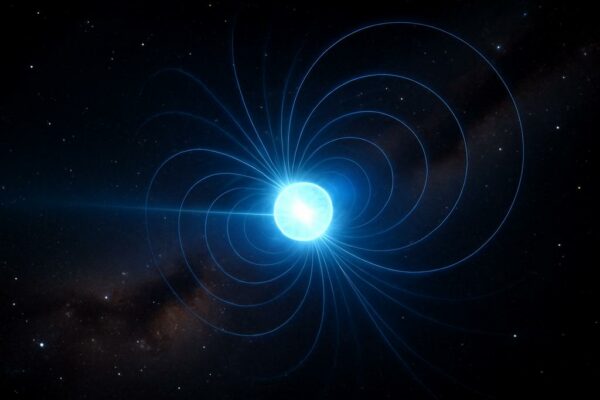






Can Quantum Weirdness Save Black Holes From Oblivion?

Black holes: cosmic vacuum cleaners, or something far stranger? For decades, physicists have wrestled with the implications of these gravitational behemoths, especially when quantum mechanics enters the picture. The late Stephen Hawking famously predicted that black holes aren’t truly black but emit radiation, leading to their eventual evaporation. But this raises a thorny problem: what…

Read More

Why Graph Wavelets Could Tighten AI Confidence

When you ask a graph neural network to label a node in a sprawling network, you’re not just seeking a single prediction. You’re asking the model to bet on its own certainty. In many real-world settings—medical diagnoses, fraud detection, or network security—that certainty matters as much as the answer itself. Yet researchers have found that…

Read More

AI Now Audits Science: Can Machines Judge Research?

The scientific literature is exploding. PubMed, a central repository of biomedical research, adds roughly 1.5 million publications annually. Keeping up is impossible, even for specialists. This deluge presents a huge challenge for healthcare: how do we ensure that clinical decisions are guided by sound research, not flawed or retracted studies? A new framework, VERIRAG, developed…

Read More

Are Wormhole Throats Really Stable in Our Universe?

Wormholes have always hovered between science and myth—the imagined tunnels through spacetime that could, in principle, connect distant regions of the cosmos. A new study from the University of Texas at Dallas, led by Travis Rippentrop, Avijit Bera, and Mustapha Ishak, digs into a pressing question behind that science-fiction gloss: can these thin-walled bridges stay…

Read More

AI’s New Superhighway: RailX Could Rewrite the Rules of Big Data

The Dawn of Hyper-Scale AI The relentless march of artificial intelligence, particularly the rise of massive language models (LLMs), demands infrastructure capable of handling workloads previously unimaginable. Training these behemoths requires a network not only capable of moving colossal amounts of data but also one that’s scalable, flexible, and – crucially – affordable. Existing network…

Read More

Three States of Matter, Now with a Twist

The Quantum Dance of Diffusion Imagine a perfectly ordered crystal lattice, the electrons within moving like dancers in a precisely choreographed ballet. Now, imagine introducing a subtle, rhythmic tremor to this perfect order—a polychromatic perturbation, a complex ripple in time. What happens to the electrons’ dance? This is the question driving recent research from Ritsumeikan…

Read More

Hidden patterns unlock a universe of hyperfields

Imagine a world where numbers don’t just add up, but *spread out* into sets. This isn’t some mathematical fantasy; it’s the realm of hyperfields, exotic structures that are quietly revolutionizing fields like algebraic geometry and matroid theory. Recently, a remarkable discovery has been made about these hyperfields, shedding light on their hidden order and potentially…

Read More

AI That Learns From Mistakes: How a ‘Mixture of Experts’ Solves the Concept Drift Problem

The Evolving World of Data The digital world throws a constant torrent of data at us—from sensor readings to social media posts, financial transactions, and network logs. This isn’t the neatly packaged data of a textbook; it’s a dynamic, ever-shifting river. Traditional AI struggles with this chaotic flow, a problem known as “concept drift.” Imagine…

Read More

AI’s New Speed Demon: How a Distributed Dataflow Revolutionizes Reinforcement Learning

The Bottleneck of Brilliance: Scaling Up AI’s Learning Curve Training cutting-edge AI models, particularly those employing reinforcement learning (RL), is akin to orchestrating a massive, complex symphony. Each instrument (a computing unit) plays a crucial part, yet the sheer number of them creates a logistical nightmare. Imagine trying to coordinate a thousand musicians, each needing…

Read More