





A New Way to See Quantum Echoes Without Orthogonality

Quantum excited states are the hidden chapters of nature’s story, the spectral fingerprints that light up when molecules vibrate, electrons hop, or spins flip. They’re essential to understanding chemistry, materials, and even how we design quantum devices. Yet for all the fuss around quantum computing and advanced simulations, predicting those excited states remains stubbornly hard….

Read More

Robust NMF finds order in noisy image chaos

The art of sorting images into meaningful groups is not just a nerdy puzzle for data scientists. It’s the backbone of modern photo apps, medical imaging archives, and the ever-growing catalogs of surveillance and social platforms. Yet real-world image collections come with a foe that isn’t easily tamed: noise. Tiny distortions, lighting quirks, or partial…

Read More

Non-commuting coordinates reveal helicity-driven space-time quantization mysteries unveiled

Demokritos National Research Center in Athens, Greece, home to the Institute of Nuclear and Particle Physics, is where George Savvidy and colleagues push the boundaries of how we describe massless particles. In a study threaded through the language of non-commutative geometry and deep symmetry, the author explores how photons and gravitons—the massless quanta of light…

Read More

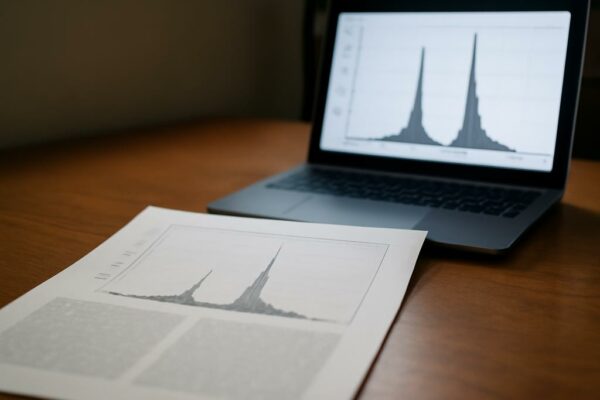
The Two Spikes That Let LLaMA Shrink Without Loss

The scale of modern language models can feel like watching a glacier slide: immense, intricate, and almost impossibly heavy. These giants—open or closed—are built from billions of parameters, tuned to predict the next word with uncanny fluency. But there’s a catch that scientists have wrestled with for years: the bigger the model, the heavier the…

Read More