


Do two bosons in a lattice form quantum bonds?

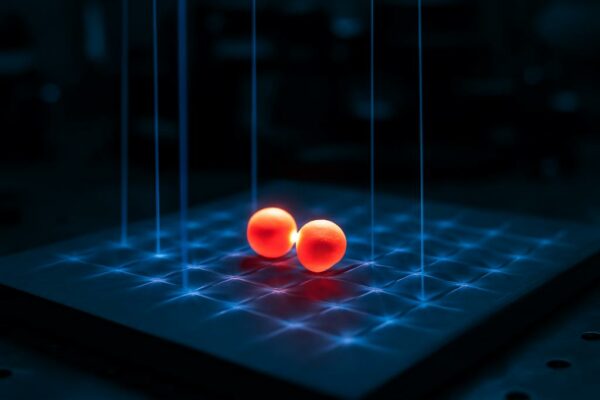
Ultracold atoms have become one of the most human ways we reach into the quantum world: editing interactions, watching particles dance in a light-made lattice, and letting the laws of physics reveal themselves in slow motion. The latest work from researchers at the Instituto de Física, Pontificia Universidad Católica de Chile, led by Matias Volante-Abovich…

Read More

The 30-Fs Blink Powers CNT Solar Cells.

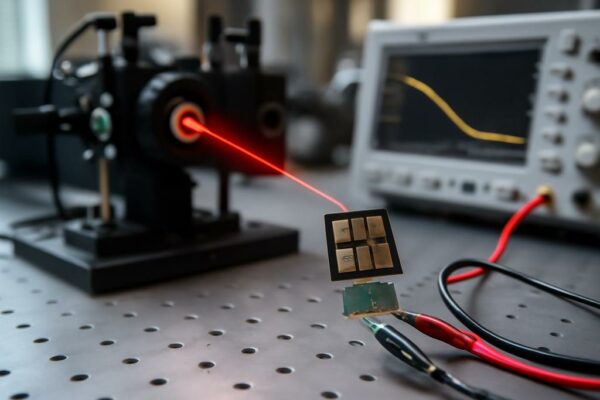
The solar cell for the 21st century isn’t a single sheet of mystery material; it’s a fast, chord-like sequence of events in which light becomes electricity in a race against time. In many next‑gen devices, photons conjure excitons—tiny, bound electron–hole pairs—that must wander to a boundary where they split into charges. For years, scientists tried…

Read More

A Tiny Subspace Bridges LLM Uncertainty and Scale

Large language models have become everyday collaborators, churning out answers, drafting emails, and even steering decisions in software that touches real lives. Yet beneath the surface lies a stubborn problem: these models can be confidently wrong, and in high-stakes domains—healthcare, autonomous systems, law—that confidence can be dangerous. The field has long chased a principled way…

Read More

A memory trick for faster graph neural nets?

The world of graph neural networks (GNNs) has become a playground for machines that learn from relationships—the way friends influence each other, the way molecules connect, the way papers cite one another. But teaching a machine to aggregate all those neighborhood signals is not just a math problem; it’s a memory problem. Training GNNs requires…

Read More

Averages Learn to Read Time in the Language of Space

Mathematicians think with abstractions that feel almost cinematic: space, time, randomness, and the ways they tuck themselves around one another. A new paper from the heartland of rigorous thought asks a surprisingly approachable question: what happens when you blend space and time into one operation on averages? The author, Aidan Young, writing from Ben-Gurion University…

Read More

When Mitosis Goes Wild, AI Learns to Generalize

The study behind this piece tackles a quiet revolution happening at the crossroads of cancer biology and artificial intelligence. It asks a deceptively simple question with huge consequences: can machines reliably tell apart atypical mitoses from normal ones when the slides come from different labs, scanners, or even species? The answer isn’t a single yes…

Read More