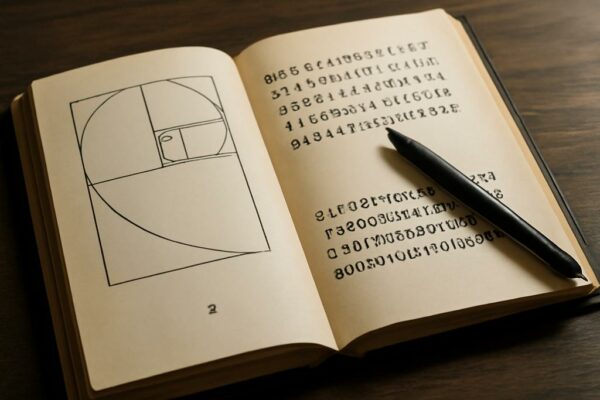






AI’s Infinite Game: A Unique Equilibrium?

The quest to understand how AI systems learn and make decisions has led researchers down many paths. One particularly intriguing approach, developed by Faruk Alpay and colleagues at Bahçeşehir University and Turkish Aeronautical Association University, uses a surprisingly elegant framework: Alpay Algebra. It frames the process of semantic convergence—how an AI comes to understand a…

Read More

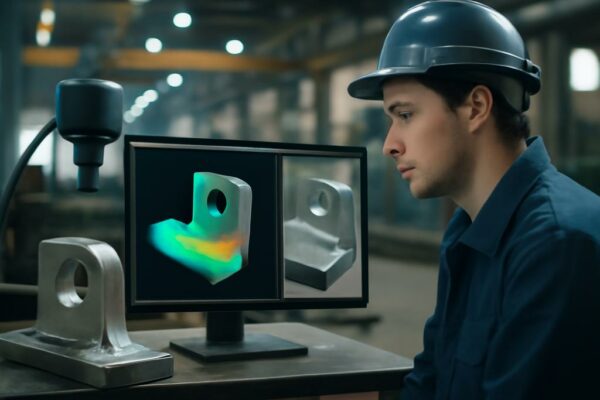
AI Now Sees in 3D: A New Way to Spot Factory Flaws

Imagine a factory floor where microscopic cracks in a tiny component, or a subtle warp in a complex assembly, are instantly flagged before they cause a catastrophic failure. This isn’t science fiction; it’s the promise of advanced anomaly detection in industrial settings, and it’s getting a major upgrade. The Challenge of Seeing Imperfections Traditionally, quality…

Read More

AI Learns to See Tumors: A Quantum Leap in Radiation Therapy

The race to perfect automated tumor segmentation in radiation therapy has taken a dramatic turn. For years, the challenge has been akin to finding a needle in a haystack – identifying cancerous tissue amidst the complex anatomy of a patient’s body. Manual delineation is painstaking, inconsistent, and time-consuming, demanding hours from already overworked radiation oncologists….

Read More

AI Could Make Group Decisions Way More Human

The Dawn of AI-Powered Group Decision-Making Imagine a world where choosing a restaurant for a group, planning a family vacation, or even making crucial decisions in a business meeting feels less like a tug-of-war and more like a collaborative journey towards a satisfying outcome. This isn’t science fiction; researchers at Graz University of Technology, led…

Read More

7 Tesla MRI’s New Trick: Making Invisible Organs Visible

Rewriting the Rules of Deep Tissue Imaging For years, doctors have struggled to get clear images of deep-seated organs like the prostate using ultra-high-field (UHF) MRI, specifically at 7 Tesla. The problem? At these incredibly powerful magnetic fields, the radio waves used to create the images behave erratically within the body, producing blurry, unreliable results….

Read More

AI Fails to Grasp Populism’s Nuances: Trump’s Rhetoric Reveals AI’s Limits

Can artificial intelligence truly understand the subtleties of human politics? A new study from the University of Copenhagen, led by Ilias Chalkidis, Stephanie Brandl, and Paris Aslanidis, throws cold water on that idea. Their research delves into the surprisingly complex task of using AI to identify populism in political speech, revealing unexpected limitations in even…

Read More

Hidden Spheres in Math’s Secret Worlds

Unveiling Hidden Geometric Structures Mathematicians have long explored the intricate landscapes of flag manifolds, geometric spaces that arise in the study of Lie groups. These manifolds are rich in structure, harboring hidden symmetries and relationships that reveal deeper insights into the nature of these fundamental mathematical objects. Recent research, led by Parker Evans and J….

Read More

AI’s New Eyes: How 6D Antennas Rewrite Wireless Communication

Rethinking Wireless: The Rise of the Six-Dimensional Movable Antenna Imagine a world where your phone’s signal strength isn’t a matter of luck, but of precise antenna positioning and orientation. That’s the promise of the six-dimensional movable antenna (6DMA), a revolutionary technology poised to transform wireless communication. Researchers at The Chinese University of Hong Kong, Shenzhen,…

Read More

Cosmic Bubbles: Untangling the Universe’s Earliest Echoes

Peering into the Primordial Soup The universe’s infancy, a period of hyper-rapid expansion known as inflation, remains shrouded in mystery. We can’t directly observe this epoch, but its ghostly imprint lingers in the subtle fluctuations of the cosmic microwave background (CMB) and the large-scale structure of the universe. Cosmologists painstakingly analyze these faint signals, hoping…

Read More

The Golden Ratio’s Secret Power Over Network Growth

The Unexpected Power of Self-Reinforcement Imagine a social network where popularity isn’t just about connections; it’s about the *history* of those connections. That’s the essence of a new mathematical model, developed by Yogesh Dahiya of the Indian Institute of Science Education and Research (IISER) Mohali and Frank den Hollander of Leiden University, that explores “self-reinforced…

Read More

The subtle art of not finding what you’re looking for

The Unexpected Limits of Finding Patterns Imagine a world where searching for patterns isn’t about finding them, but about carefully avoiding specific ones. That’s the essence of a fascinating area of mathematics explored in a recent paper from the University of British Columbia and the Alfréd Rényi Institute of Mathematics, authored by R.P. Anstee, Oakley…

Read More

AI Image Captions: Better, But Biased?

AI is getting remarkably good at describing images in detail. Think of those automatic alt-text generators on websites, but amped up to eleven. These large vision-language models (LVLMs) now produce descriptions that are impressively nuanced, going beyond simple labels. But a new study from researchers at NVIDIA Research, Osaka University, and Stanford University reveals a…

Read More