




Stamp Folds Hint at a Hidden Web of Math

Fold a strip of stamps and the result is more than a neatly stacked rectangle; it becomes a map of possibilities shaped by tiny rules. The paper by Hull, Ibrahim, Paltrowitz, Ter-Saakov, and Wang looks at a deceptively simple toy—1 × n strips of stamps with each crease preassigned as a mountain or a valley—and…

Read More

When 2D Keypoints Conquer a Dense LiDAR Map?

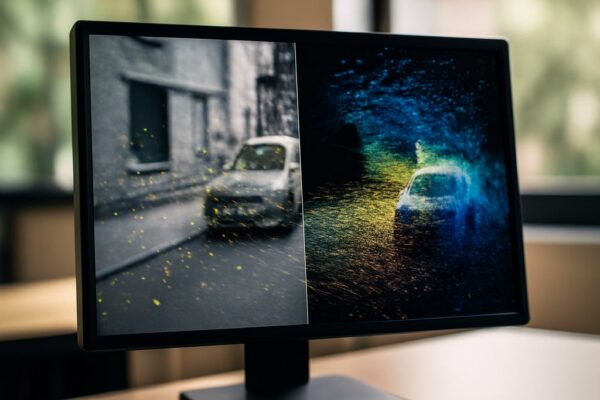
Visual localization is the quiet but essential magic behind every slick AR demo, every autonomous delivery robot, and every mapping app that seems to know where you are without asking. It’s the challenge of figuring out the camera’s 6-DOF pose—the exact position and orientation in three-dimensional space—within a sprawling 3D map. For years, researchers leaned…

Read More

What bio-data augmentation could save science from rumor

In the world of biomedical text mining, researchers train computers to read papers, pull out meaningful links between drugs, genes, and diseases, and help scientists navigate a flood of information. But a stubborn bottleneck keeps stalling progress: there simply isn’t enough high-quality, carefully labeled data to teach these systems how biological relationships actually work. That…

Read More

Interfaces May Steer Heat Spikes in TNT Composites

The hidden drama of many high-energy formulations isn’t in the chemistry alone but in the tiny corners where materials meet: the grain boundaries, the surfaces, the junctions where TNT, the infamous explosive, brushes up against HMX, another energetic crystal. A new modeling framework from researchers at Purdue University, Lawrence Livermore National Laboratory (LLNL), and Los…

Read More

Counting crowds gets a softer, smarter nudge

Counting people in a photo isn’t just a nerdy puzzle; it’s a real‑world skein of tiny decisions: who counts, who’s occluded, where a group ends and a stray limb begins. For years, researchers trained counting systems with a blunt signal: either the count was right, or it wasn’t. But in messy scenes—dense crowds, shifting light,…

Read More

Can AI Read Doctor’s Notes to Detect Disease?

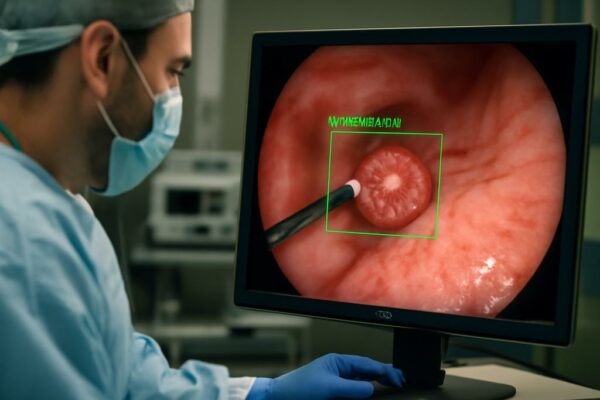
The notes inside electronic health records resemble a bustling city at noon: patient stories, test results, medication lists, and the quiet whispers of clinicians’ judgments. They’re essential for understanding a patient’s health, but they’re also messy, unstructured, and enormous in volume. That combination has kept researchers from turning those notes into scalable, real-time health signals—until…

Read More

A Hidden Antiferromagnetic Shortcut Lights Up Memory

Magnons—the quantum packets of spin that carry a magnetic whisper through a solid—have long tantalized physicists with the promise of ultra-low-power information highways inside materials. Since Felix Bloch first envisioned spin waves in the 1930s, scientists have chased the dream of guiding these magnetic quanta with the same ease we now guide electrons. The potential…

Read More

Could OTFS calm mmWave chaos across cells today?

The paper behind this piece isn’t about a single dazzling gadget or a flashy experiment. It’s about how the invisible plumbing of future wireless networks might work more gracefully when there are many cooks in the kitchen. In mmWave downlinks—those ultra-fast wireless links that promise mind-boggling data rates but hate getting blocked by a coffee…

Read More

Do Ant Trails Reveal Hidden Equations?

The study of how countless tiny agents organize themselves into bigger patterns is one of science scripts that reads like a nature documentary and a mathematics textbook at once. In the latest work by Maria Bruna, Markus Schmidtchen, and Oscar de Wit, a team of researchers from the University of Cambridge digs into a bold…

Read More